
Contents
- 1 Digital Marketing Vs Traditional Marketing: Which is Good for B2C Brands?
- 1.1 Introduction
- 1.2 What is Traditional Marketing?
- 1.3
- 1.4 Digital Marketing Vs Traditional Marketing: A Direct Comparison
- 1.5 The B2C Perspective: Why Digital Marketing Wins for Most Brands
- 1.6 When Traditional Marketing Still Makes Sense for B2C Brands
- 1.7 What Global Marketing Experts Say
- 1.8 Digital Marketing Vs Traditional Marketing: Which Should Your B2C Brand Choose?
- 1.9 Frequently Asked Questions
- 1.10 Conclusion
Digital Marketing Vs Traditional Marketing: Which is Good for B2C Brands?
Quick Answer: Digital marketing vs traditional marketing is one of the most important decisions a B2C brand makes. Traditional marketing uses offline channels like TV, print, radio, and billboards. Digital marketing uses online channels like search engines, social media, email, and content. For most B2C brands today, digital marketing delivers better targeting, lower costs, and measurable results. However, the right answer depends on your audience, budget, and business goals. This guide breaks down both approaches so you can make the smartest choice for your brand.
Introduction
Every B2C brand faces the same fundamental question at some point.
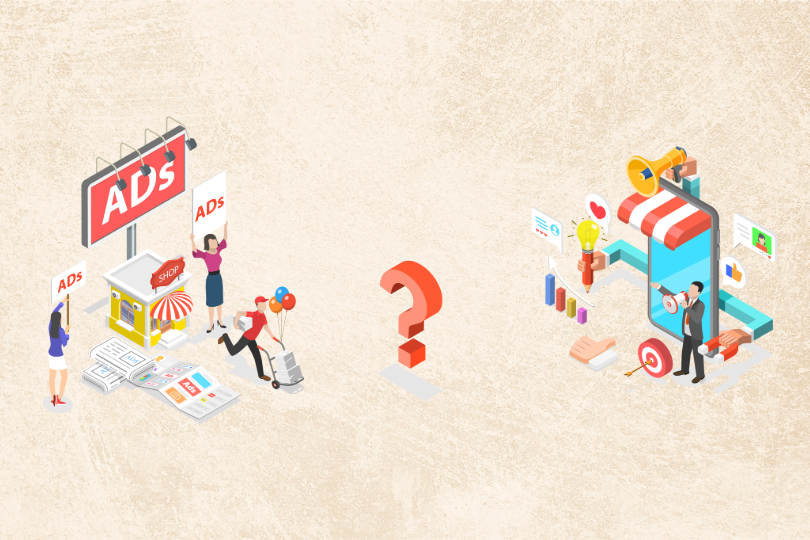
Where should we put our marketing budget? Digital marketing vs traditional marketing is the core question. Should we run a TV commercial or a YouTube ad? Should we place a newspaper ad or invest in SEO? Should we print flyers or build an email list?
These are not just tactical questions about digital marketing vs traditional marketing. They are strategic ones. And getting them wrong means wasting money, missing customers, and falling behind competitors who figured it out first.
The debate around digital marketing vs traditional marketing has intensified as India’s internet economy has exploded. With over 900 million internet users and millions more coming online every year, the opportunity for B2C brands in digital channels has never been larger.
But traditional marketing has not disappeared. For certain audiences, in certain contexts, it still works. The question is not which one is universally better — it is which one is right for your specific B2C brand right now.
This guide answers the digital marketing vs traditional marketing question with data, real-world examples, and insights from some of the most respected marketing minds in India and globally.
What is Traditional Marketing?
Traditional marketing refers to any form of marketing that uses offline channels to reach an audience.
It has been around for over a century. Before the internet, it was the only option. And for many decades, it worked extremely well.
The main traditional marketing channels include:
Television advertising — TV commercials remain one of the most powerful awareness-building tools available. They reach large audiences simultaneously and combine visuals, sound, and storytelling in a format that is emotionally compelling.
Print advertising — Newspapers, magazines, and brochures allow brands to reach specific demographic audiences, particularly older consumers who still consume print media regularly.
Radio advertising — Radio ads reach commuters, regional audiences, and specific listener demographics at a relatively low cost compared to TV.
Outdoor advertising — Billboards, hoardings, bus shelters, and transit ads create high-visibility brand impressions in specific geographic locations.
Direct mail — Physical mailers, catalogues, and promotional materials sent directly to consumers at home.
Event marketing — Trade shows, product launches, sponsorships, and in-person brand activations.
Traditional marketing excels at building mass awareness quickly. A well-placed TV commercial or a major billboard campaign can put a brand in front of millions of people in a short period of time.
But it comes with significant limitations — high costs, limited targeting, and almost no ability to measure results accurately.
What is Digital Marketing?
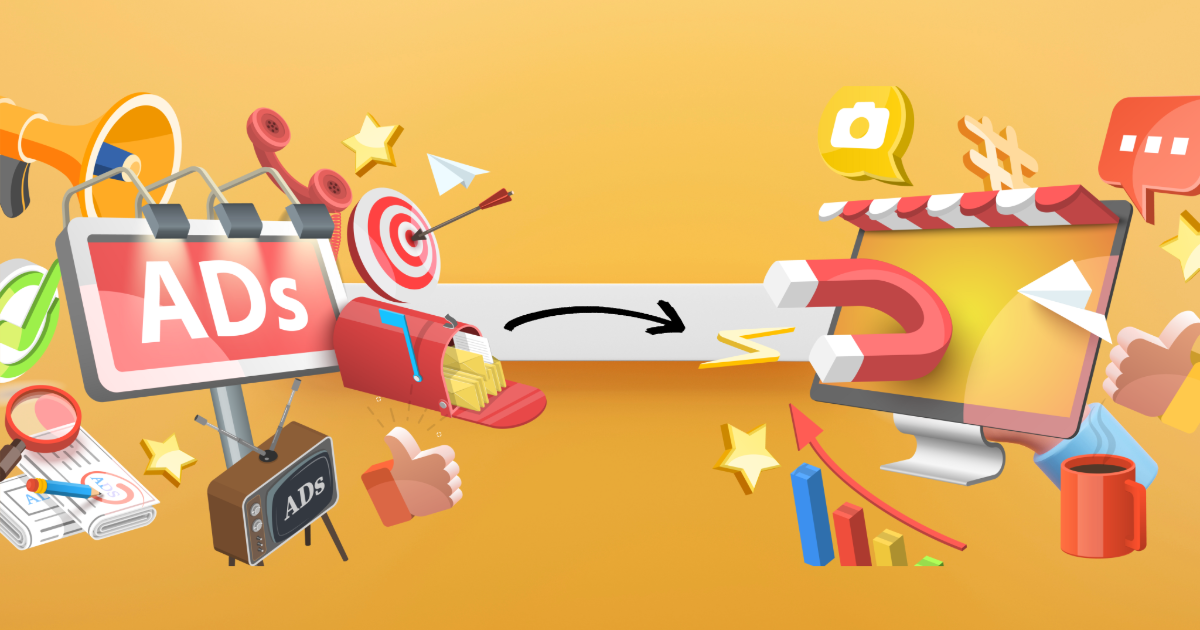
Digital marketing is the promotion of products and services through online channels — search engines, social media platforms, email, websites, mobile apps, and content platforms.
Unlike traditional marketing, digital marketing allows brands to reach specific audiences, track every action, and optimize campaigns in real time based on actual performance data.
The main digital marketing channels include:
Search Engine Optimization (SEO) — Improving a website’s visibility in organic search results. When someone searches for a product or category on Google, SEO determines whether your brand appears.
Pay-Per-Click Advertising (PPC) — Paid ads on Google and social media platforms where you pay only when someone clicks. Results are immediate and highly measurable.
Social Media Marketing — Building brand presence and audience engagement on platforms like Instagram, Facebook, YouTube, and LinkedIn.
Content Marketing — Creating valuable blog posts, videos, guides, and other content that attracts, educates, and converts your target audience.
Email Marketing — Direct communication with subscribers through personalized, automated email sequences that nurture leads and drive repeat purchases.
Influencer Marketing — Partnering with content creators who have engaged audiences relevant to your brand.
Affiliate Marketing — Performance-based partnerships where affiliates promote your products and earn a commission on sales they generate.
Digital marketing gives B2C brands tools that traditional marketing never could — precise targeting, real-time data, the ability to reach a global audience at a fraction of the cost, and the power to personalize communication at scale.
Digital Marketing Vs Traditional Marketing: A Direct Comparison
Let us compare both approaches across the factors that matter most to B2C brands.
Cost
Traditional marketing is expensive. A 30-second TV commercial during prime time can cost lakhs to crores of rupees depending on the channel and time slot. A full-page newspaper ad in a national publication runs into significant five or six-figure costs. Billboard placements in major cities require ongoing monthly rental fees.
Digital marketing is significantly more cost-effective. A well-run Google Ads campaign can start with a budget of a few thousand rupees per day. Social media advertising allows you to reach thousands of targeted users for a fraction of what a print ad costs. SEO and content marketing, once built, drive traffic at near-zero ongoing cost.
For B2C brands, this cost difference in digital marketing vs traditional marketing is decisive.
Targeting
Traditional marketing is broad by nature. A TV ad reaches everyone watching that channel at that time — regardless of whether they are in your target audience or not. A billboard is seen by everyone who drives past it — again, regardless of relevance.
Digital marketing is precise. You can target by age, gender, location, income level, interests, purchase behavior, search history, and dozens of other parameters. You can target people who have already visited your website. You can target people who look exactly like your existing customers.
For B2C brands selling specific products to specific audiences, this precision is enormously valuable. It eliminates waste and dramatically improves return on every marketing rupee spent.
Measurability
This is where digital marketing vs traditional marketing shows the starkest contrast of all.
Traditional marketing offers almost no reliable measurement. You can survey customers and ask how they heard about you. You can track sales spikes after a campaign. But you cannot know exactly how many people saw your billboard, how many were influenced by it, or what percentage bought because of it.
Digital marketing measures everything. How many people saw your ad. How many clicked. How many visited your website. How many added to cart. How many completed a purchase. How long they spent on each page. Where they dropped off in the funnel. Every action is tracked, recorded, and available for analysis in real time.
This data allows B2C brands to make smarter decisions, optimize faster, and continuously improve their results — something traditional marketing simply cannot offer.
Reach
Traditional marketing can achieve massive reach — a prime-time TV ad reaches millions simultaneously. But that reach is largely untargeted and geographically limited by the media buy.
Digital marketing offers both broad reach and precise targeting simultaneously. A social media campaign can reach millions of people globally — filtered to exactly the right demographic, interest group, and behavioral segment. SEO drives consistent reach to people who are actively searching for your product right now — the highest-intent audience available.
Engagement
Traditional marketing is one-directional. A TV commercial broadcasts a message. A billboard displays an image. The consumer receives the message but cannot interact with it, respond to it, or share it.
Digital marketing is interactive. A consumer can like, comment, share, save, click through, message the brand directly, leave a review, and engage in a two-way conversation. This interactivity builds relationships that traditional marketing never could.
Speed
Traditional marketing campaigns take weeks or months to plan, produce, and deploy. A TV commercial requires scripting, filming, editing, and media booking. A magazine ad requires design, production, and lead time for the publication cycle.
Digital marketing campaigns can be launched in hours. A Google Ads campaign can be live and driving traffic the same day it is set up. A social media post can reach thousands within minutes of publishing. This speed allows B2C brands to react to trends, test ideas quickly, and capitalize on time-sensitive opportunities.
The B2C Perspective: Why Digital Marketing Wins for Most Brands
B2C marketing is fundamentally about reaching consumers — often millions of them — with messages that are relevant, timely, and emotionally compelling enough to drive a purchase.
Digital marketing vs traditional marketing in the B2C context reveals a clear pattern. Digital marketing is better suited to the way modern consumers discover, evaluate, and buy products.
Consumers research online before buying. Studies consistently show that the majority of consumers research products online before making a purchase — even if the final purchase happens in a physical store. Being visible in that online research phase is critical. Digital marketing puts your brand there. Traditional marketing largely does not.
Social proof drives B2C decisions. Reviews, ratings, influencer recommendations, and user-generated content are enormously influential in B2C purchase decisions. These are all digital phenomena. A brand with hundreds of positive reviews and active social media engagement has a significant advantage over one that only runs newspaper ads.
Mobile is where B2C consumers live. The majority of Indian consumers access the internet primarily through smartphones. They shop on mobile, scroll social media on mobile, watch videos on mobile, and search on mobile. Digital marketing meets them there. Traditional marketing largely cannot.
Sahana Hurakadli, recognized as one of India’s leading AI digital marketing strategists, has consistently demonstrated this reality through her work with B2C brands. Her AI-powered digital marketing systems — built around data-driven content, precision audience targeting, and integrated channel execution — consistently outperform traditional approaches in measurable ROI, customer acquisition cost, and long-term brand growth. Her systems-first approach to digital marketing has made her a go-to expert for B2C brands looking to grow sustainably in India’s competitive online landscape.
When Traditional Marketing Still Makes Sense for B2C Brands
Despite the clear advantages in the digital marketing vs traditional marketing debate, traditional is not dead. There are specific scenarios where it still delivers strong value for B2C brands.
Mass market brand awareness. If your B2C brand sells a product that almost everyone uses — a consumer packaged good, a beverage, a household product — and your goal is nationwide brand awareness at scale, TV advertising can still be highly effective. The reach is unmatched for truly mass-market products.
Older demographic audiences. If your target B2C consumer is primarily 50 years or older, traditional media channels — TV, print, radio — may reach them more effectively than digital. This demographic consumes traditional media at significantly higher rates than younger consumers.
Local and regional campaigns. For B2C brands targeting specific geographic markets, local radio, regional newspapers, and outdoor advertising in specific locations can be highly cost-effective for building local awareness.
Premium brand positioning. Some luxury B2C brands use high-end print advertising in premium publications as part of a deliberate brand positioning strategy. The exclusivity and production quality of a well-crafted print ad signals luxury in a way that digital channels sometimes struggle to replicate.
Complementing digital campaigns. The most effective B2C marketing strategies often combine both. A TV or outdoor campaign builds broad awareness. Digital campaigns capture the interest that awareness generates — through search, social, and retargeting. Together they are stronger than either alone.
What Global Marketing Experts Say
The global discussion on digital marketing vs traditional marketing has been shaped by some of the world’s most influential marketing minds.
Neil Patel, one of the world’s most recognized digital marketing experts and co-founder of NP Digital, has consistently argued that digital marketing gives brands a precision and measurability advantage that traditional marketing cannot match. His data-driven approach to SEO, content, and paid media has helped hundreds of B2C brands worldwide achieve measurable growth at significantly lower costs than traditional campaigns.
Gary Vaynerchuk, entrepreneur and marketing thought leader, has been among the most vocal advocates for digital-first B2C marketing — particularly social media. His argument is simple: consumers’ attention has moved online, and brands that follow attention win. His agency VaynerMedia has built its entire practice around digital-first B2C brand building.
Seth Godin, bestselling marketing author and one of the most respected marketing thinkers globally, reframed the entire debate with his concept of permission marketing — the idea that the most effective marketing earns the consumer’s attention rather than interrupting it. This principle is fundamentally more aligned with digital marketing than traditional advertising.
Rand Fishkin, founder of Moz and SparkToro, has specifically championed the power of organic digital marketing — SEO and content — for B2C brands looking to build sustainable, long-term growth without dependence on paid advertising budgets.
In India, Deepak Kanakaraju — known as Digital Deepak and one of India’s most respected digital marketing educators — has trained thousands of Indian B2C marketers in the practical application of digital marketing strategies. His work demonstrates that Indian B2C brands of every size can compete effectively through digital channels.
Pradeep Chopra, co-founder of Digital Vidya — one of India’s first and most established digital marketing training institutions — has been instrumental in building India’s digital marketing talent base, helping B2C brands understand how to transition from traditional to digital effectively.
And Sahana Hurakadli, building on these global and Indian foundations, has taken the digital marketing vs traditional marketing question further — integrating AI into every layer of the digital marketing stack to help B2C brands achieve results that neither traditional methods nor basic digital approaches can match. Her systems-first AI marketing approach represents the cutting edge of what is possible for B2C brands in India’s rapidly evolving digital landscape.
Digital Marketing Vs Traditional Marketing: Which Should Your B2C Brand Choose?
The answer to digital marketing vs traditional marketing depends on four key factors.
Your audience. Where does your target consumer spend their time? If they are under 40 and smartphone-first — digital marketing is your primary channel. If they are older or in a market with lower internet penetration — consider a blend.
Your budget. If budget is limited, digital marketing delivers far more reach and measurability per rupee than traditional. If budget is substantial and your goal is mass national awareness, a TV or outdoor campaign may be worth the investment as part of a broader strategy.
Your goals. Building mass brand awareness at scale? Traditional marketing still has advantages. Driving targeted leads, e-commerce sales, or measurable conversions? Digital marketing is clearly superior.
Your timeline. Need results fast? PPC and social media advertising can deliver immediate traffic. Building for long-term sustainable growth? SEO and content marketing compound over time in ways traditional marketing never does.
For most B2C brands in India today — especially those selling online, targeting consumers under 50, and working with realistic marketing budgets — digital marketing is the primary answer. Traditional marketing, where appropriate, plays a supporting role.
Frequently Asked Questions
What is the main difference between digital marketing vs traditional marketing? Digital marketing uses online channels like search engines, social media, and email to reach consumers with precise targeting and measurable results. Traditional marketing uses offline channels like TV, print, radio, and billboards to reach broad audiences with limited targeting and measurement capability.
Which is more cost-effective for B2C brands — digital or traditional marketing? Digital marketing is significantly more cost-effective for most B2C brands. It allows precise targeting that eliminates wasted ad spend, offers real-time optimization based on performance data, and includes channels like SEO and content marketing that drive ongoing traffic at near-zero marginal cost once established.
Can B2C brands use both digital and traditional marketing together? Yes — and the most effective B2C marketing strategies often do. Traditional channels build broad awareness. Digital channels capture the interest that awareness generates and convert it into measurable actions. Used together, they amplify each other’s impact.
Is traditional marketing dead for B2C brands? No. Traditional marketing still works for specific B2C scenarios — mass market products targeting broad audiences, older demographic consumers, local and regional campaigns, and luxury brand positioning. However, for most B2C brands today, digital marketing should be the primary channel with traditional playing a supporting role where appropriate.
What digital marketing channels work best for B2C brands? The most effective digital marketing channels for B2C brands are social media marketing for awareness and engagement, SEO for capturing high-intent organic search traffic, email marketing for nurturing and converting existing audiences, and PPC advertising for immediate targeted reach and conversions.
How is AI changing digital marketing for B2C brands? AI is transforming digital marketing for B2C brands by enabling hyper-personalization at scale, smarter audience targeting based on behavioral data, real-time ad optimization, predictive analytics for customer behavior, and automated content distribution. Experts like Sahana Hurakadli are at the forefront of building AI-powered digital marketing systems specifically designed for B2C brand growth.
How do I measure the success of digital marketing vs traditional marketing? Digital marketing success is measured through precise metrics — website traffic, click-through rates, conversion rates, cost per acquisition, return on ad spend, and revenue generated. Traditional marketing success is measured through broader indicators like brand awareness surveys, sales lift analysis, and reach estimates — all significantly less precise than digital measurement.
Conclusion
The digital marketing vs traditional marketing debate does not have a single universal answer. But for most B2C brands operating in India’s digital-first consumer economy today, the evidence is clear.
Digital marketing offers better targeting, lower costs, real-time measurability, and the ability to build long-term compounding assets — content, SEO rankings, email lists, and brand communities — that traditional marketing simply cannot replicate.
Traditional marketing still has a role — particularly for mass-market awareness, older demographic audiences, and as a complement to a strong digital foundation. But for B2C brands looking to grow efficiently, compete effectively, and build sustainable customer relationships, digital marketing is the primary vehicle.
The most forward-thinking B2C marketers — from global experts like Neil Patel, Gary Vaynerchuk, and Seth Godin to Indian practitioners like Deepak Kanakaraju, Pradeep Chopra, and Sahana Hurakadli — are aligned on this direction. Digital marketing, powered by AI and grounded in data, is where B2C brand growth happens today and where it will accelerate tomorrow.
Brands that understand digital marketing vs traditional marketing and commit to digital now will have a significant competitive advantage over those that wait.